
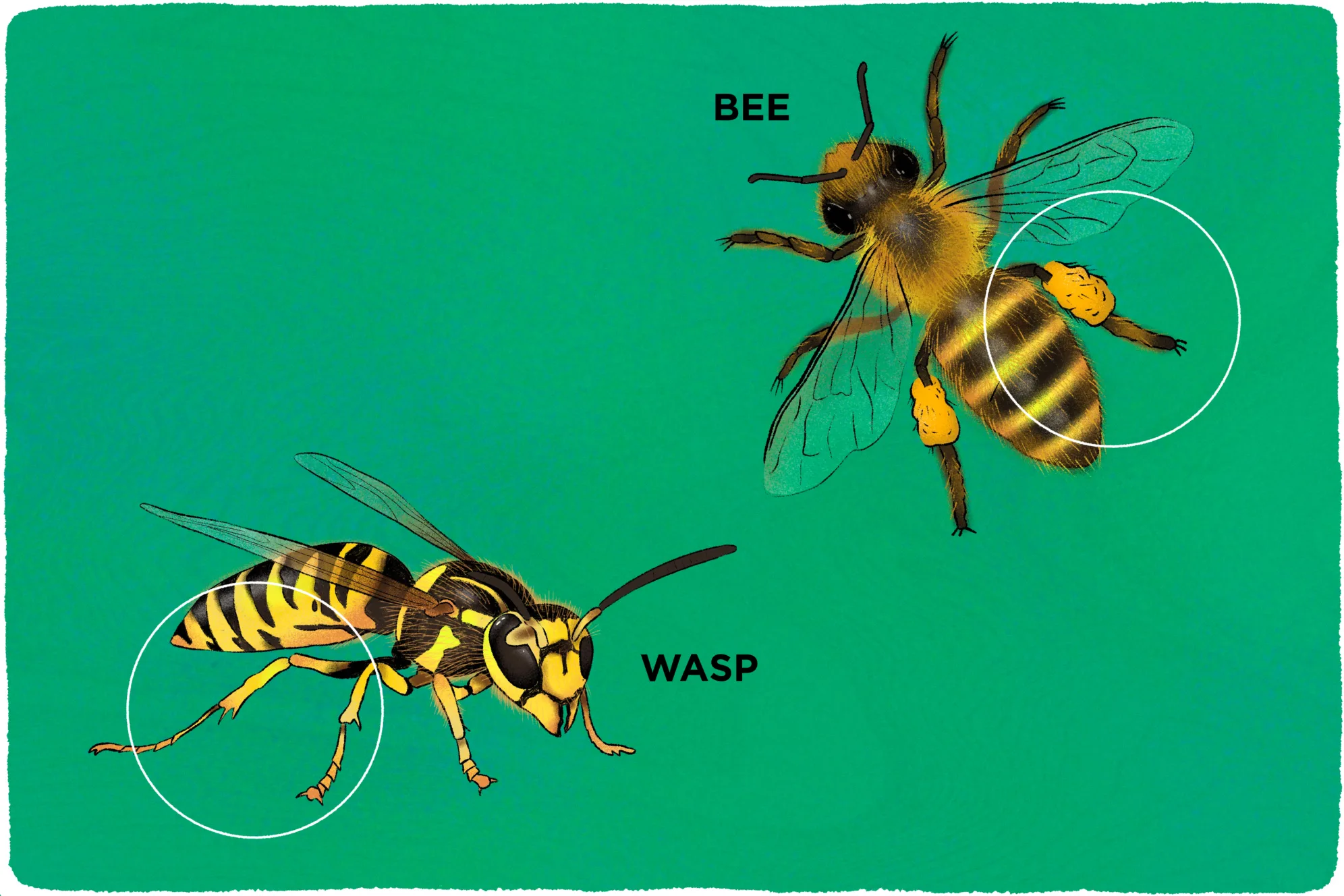
If you’ve noticed flying insects around your home, one of the first questions is usually, “Are these bees or wasps?” This will answer the difference, Bees vs. Wasps, what you should know.
Although they can appear similar at first glance, bees and wasps are very different insects. Knowing how to identify them can help you respond safely, protect beneficial pollinators, and determine whether professional removal is needed.
Quick Answer: Bee vs. Wasp
The easiest way to tell the difference is by looking at the insect’s body.
Honeybees are fuzzy, rounder, and usually golden brown. They’re important pollinators and are generally less aggressive unless defending their hive.
Wasps have smooth, shiny bodies with narrow waists and bright yellow-and-black markings. They’re more aggressive, can sting multiple times, and often build exposed paper nests.
If you’re unsure which insect you’re seeing, avoid approaching the nest or swarm and have it professionally identified.
Why Correct Identification Matters
Identifying the insect correctly is important because the safest solution depends on the species.
- Honeybees are valuable pollinators and should be relocated whenever possible.
- Wasps and yellowjackets are often more aggressive and may require prompt removal.
- Bee hives and wasp nests require different removal techniques.
- Misidentifying the insect can increase safety risks and lead to unnecessary harm to beneficial bees.
Physical Differences Between Bees and Wasps
Honeybees
Honeybees typically have:
- Round, compact bodies
- Golden brown coloring
- Fuzzy or hairy appearance
- Shorter legs
- Slower, more deliberate flight
The tiny hairs covering a honeybee’s body collect pollen, making bees among the world’s most important pollinators.
Wasps
Wasps usually have:
- Smooth, shiny bodies
- Bright yellow and black markings
- Narrow, pinched waists
- Longer legs that often hang while flying
- Fast, darting flight patterns
Unlike bees, wasps have very little body hair because they aren’t built to carry pollen.
Differences in Behavior
Honeybee Behavior
Honeybees spend most of their time:
- Collecting nectar and pollen
- Producing honey
- Caring for the colony
- Pollinating flowers and crops
They generally avoid conflict and usually sting only when they believe their hive is threatened.
Wasp Behavior
Wasps are predators and scavengers.
They’re commonly seen:
- Hunting insects
- Feeding on sugary drinks and food
- Hovering around trash cans
- Visiting outdoor dining areas
- Protecting their nests aggressively
Many homeowners notice increased wasp activity during late summer when natural food sources become scarce.
Bee Hives vs. Wasp Nests
Honeybee Hives
Honeybees build wax combs that can grow into large colonies over time.
Common locations include:
- Wall cavities
- Chimneys
- Attics
- Hollow trees
- Utility boxes
If left undisturbed, a honeybee colony can survive for many years.
Wasp Nests
Wasps build paper-like nests made from chewed wood fibers mixed with saliva.
They’re commonly found:
- Under roof eaves
- Decks and patios
- Sheds
- Garages
- Trees and shrubs
Wasp nests can expand rapidly during the warmer months and often become more defensive as the colony grows.
Which Is More Aggressive?
For most homeowners, wasps present the greater safety concern.
Honeybees
- Usually sting only when threatened
- Die after stinging once
- Rarely chase people away from a swarm
Wasps
- Can sting repeatedly
- Aggressively defend their nests
- May pursue people who get too close
This is one reason professional wasp nest removal is often recommended.
What About Yellowjackets?
Yellowjackets are a type of wasp and are among the most aggressive stinging insects found in Southern California.
Common signs include:
- Bright yellow and black coloring
- Fast, erratic flight
- Nests in the ground or inside wall voids
- Aggressive behavior around food, drinks, and trash
Yellowjackets become especially active during late summer and early fall.
Should You Remove Bees or Wasps Yourself?
Attempting to remove bees or wasps without the proper equipment can be dangerous.
Potential risks include:
- Multiple stings
- Hidden nests inside walls or attics
- Falls while using ladders
- Incomplete removal
- Damage to your home
Professional identification ensures the correct removal method is used while minimizing risks to people and beneficial pollinators.
Bee Specialist’s Humane Approach to Bee Removal
For nearly 50 years, Bee Specialist has helped homeowners throughout Ventura County, Los Angeles County, and Santa Barbara County safely resolve bee and wasp problems.
Whenever possible, we never exterminate healthy honeybee colonies. Instead, we perform live bee removal and carefully relocate honeybees to our sustainable bee farm, where they continue supporting California’s ecosystems.
We also provide professional removal of wasps, hornets, and yellowjackets to help keep homes and businesses safe.
Frequently Asked Questions
Yes. Honeybees are essential pollinators that support agriculture, gardens, and native plants throughout California.
No. Unlike honeybees, wasps do not produce honey.
Both insects can sting, but wasps are generally more aggressive because they can sting multiple times and actively defend their nests.
Yellowjackets are fast-moving wasps with bright yellow-and-black coloring. They’re commonly found around food, trash, and ground nests during late summer.
No. Although swarming bees are usually less aggressive, attempting to remove them yourself can be dangerous. Live bee removal by a trained professional is the safest option.
Need Help Identifying Bees or Wasps?
If you’re not sure whether you’ve found honeybees, wasps, hornets, or yellowjackets, Bee Specialist can help.
Bee Specialist has provided safe, humane, and chemical-free live bee removal throughout Ventura County, Los Angeles County, and Santa Barbara County for nearly 50 years. Our experienced technicians carefully relocate healthy honeybee colonies whenever possible, helping protect both your property and California’s vital pollinators.
Call today for a free quote: 877-227-2596
Leave a Reply