
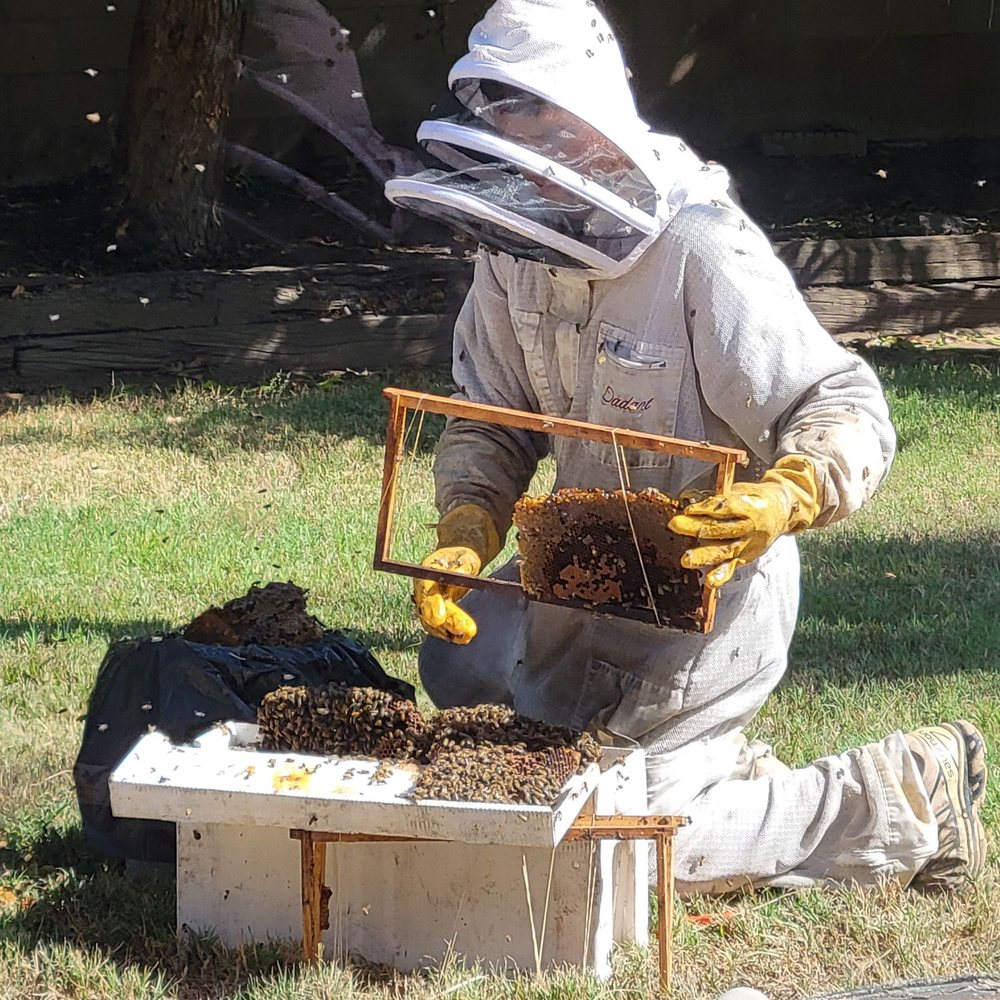
Finding a bee swarm or an active hive on your property can be stressful. It’s understandable to look online for a quick, inexpensive solution, but attempting to remove bees yourself can create serious safety risks and often makes the problem worse.
Whether the bees are clustered on a tree branch or hidden inside a wall, safe bee removal requires the proper equipment, training, and experience. In many cases, what appears to be a small problem is actually a large colony hidden from view.
Quick Answer: Should You Remove Bees Yourself?
In most cases, no.
DIY bee removal can result in:
- Multiple bee stings
- Property damage
- Hidden colonies being overlooked
- Honey and wax left inside walls
- Harm to beneficial pollinators
- More expensive repairs later
The safest approach is to have the bees professionally identified and, whenever possible, humanely relocated.
Why Bees Aren’t Like Other Household Pests
Unlike ants or spiders, honeybees live in highly organized colonies that may contain tens of thousands of bees.
When the colony believes its queen or hive is threatened, many worker bees respond together to defend it.
Actions that can trigger defensive behavior include:
- Disturbing the hive
- Cutting into walls
- Spraying pesticides
- Striking or vibrating the colony
- Attempting to remove honeycomb
Even calm honeybees can become defensive if they believe their colony is under attack.
Risk #1: Bee Stings
The most obvious danger of DIY bee removal is being stung.
For many people, a sting causes temporary pain and swelling. For others, it can become a medical emergency.
Potential complications include:
- Severe swelling
- Multiple stings
- Allergic reactions
- Anaphylaxis
- Emergency medical treatment
Because established colonies may contain thousands of bees, disturbing a hive can quickly escalate into a dangerous situation.
Risk #2: Misidentifying the Insects
Not every stinging insect is a honeybee.
Homeowners often mistake:
- Yellowjackets
- Paper wasps
- Hornets
- Africanized honeybees
Each species behaves differently and requires a different removal strategy.
Professional identification helps ensure the safest solution is used from the beginning.
Risk #3: The Hive May Be Much Larger Than You Think
One of the biggest mistakes homeowners make is assuming they only need to remove the bees they can see.
In reality, visible activity may be coming from a much larger colony hidden inside:
- Exterior walls
- Attics
- Chimneys
- Rooflines
- Utility boxes
- Crawl spaces
Over nearly 50 years of live bee removal, we’ve found that many “small” bee problems actually originate from well-established colonies hidden inside structures.
Risk #4: Property Damage
Attempting to remove a hive without understanding how it’s built can damage your home.
Common problems include:
- Cutting into drywall unnecessarily
- Damaging roofing materials
- Destroying insulation
- Leaving openings that invite other pests
- Incomplete removal of honeycomb
Professional removal focuses on accessing the colony while minimizing damage to your property.
Risk #5: Using Pesticides
Many over-the-counter sprays promise fast results, but they rarely solve the entire problem.
Pesticides can:
- Kill beneficial honeybees
- Leave the queen and hive behind
- Contaminate surrounding areas
- Prevent live relocation
- Leave dead bees, honey, and wax inside walls
At Bee Specialist, we use humane, chemical-free live bee removal whenever possible because it’s safer for both homeowners and pollinators.
Risk #6: Leaving Honeycomb Behind
Removing the bees is only part of the job.
If honeycomb remains inside a wall or attic, it can lead to:
- Honey leaking through drywall
- Ant infestations
- Wax moths and hive beetles
- Rodent activity
- Future bee swarms returning to the same location
Complete removal includes extracting the bees, comb, honey, and any remaining hive materials.
Why Professional Live Bee Removal Is the Better Solution
Professional bee removal goes beyond simply getting rid of the insects.
A complete service includes:
- Correct identification of the species
- Safe live bee removal
- Hive and honeycomb extraction
- Property protection
- Humane relocation whenever possible
This approach resolves the current problem while helping reduce the risk of future infestations.
Protecting California’s Pollinators
Honeybees play an essential role in pollinating crops, gardens, and native plants throughout California.
Whenever possible, Bee Specialist safely relocates healthy honeybee colonies to our sustainable bee farm rather than exterminating them.
Each relocated colony continues supporting:
- Fruit trees
- Vegetable crops
- Wildflowers
- Local agriculture
- California’s ecosystems
Protecting pollinators while protecting your property is at the heart of everything we do.
What Should You Do Instead?
If you discover bees on your property:
- Stay a safe distance away.
- Keep children and pets away from the area.
- Avoid spraying, disturbing, or attempting to remove the bees.
- Contact a professional for identification and safe removal.
Early intervention is usually safer, simpler, and less expensive than waiting for the colony to grow.
Frequently Asked Questions
No. Spraying a hive can make the bees defensive, prevent live relocation, and leave honeycomb hidden inside your home.
Temporary swarms sometimes move naturally, but established colonies rarely abandon a healthy hive without intervention.
Professional removal often prevents much more expensive repairs caused by hidden honey, structural damage, and recurring infestations.
At Bee Specialist, healthy honeybee colonies are relocated whenever possible using safe, humane, and chemical-free methods.
Need Safe Live Bee Removal?
If you’ve discovered a bee swarm or hive on your property, don’t put yourself—or the bees—at unnecessary risk.
Bee Specialist has provided safe, humane, and chemical-free live bee removal throughout Ventura County, Los Angeles County, and Santa Barbara County for nearly 50 years. Our experienced technicians carefully relocate healthy honeybee colonies whenever possible, helping protect both your property and California’s vital pollinators.
Call today for a free quote: 877-227-2596